Enterprise Virtualization Migration Malaysia | Wiki Labs
Navigating the Virtualization Shift: How Enterprises Can Reduce Risk and Control Costs
Introduction: A Growing Concern for Enterprise IT Leaders
In Enterprise IT, stability and predictability are critical. Yet recent shifts in the virtualization landscape have created uncertainty for many organizations that rely heavily on traditional platforms. Between changes in vendor ownership, evolving licensing models, and products reaching end-of-life, IT leaders are asking an important question:
Is our current virtualization strategy safe for the next five years?
If rising licensing costs, unclear support roadmaps, or the complexity of application modernization are already on your radar, you are not alone. This article provides an educational overview of what is happening in the virtualization market—and how a unified platform approach can help enterprises future-proof their infrastructure without disrupting critical operations.
The Current Virtualization Landscape: Why Change Is Now Inevitable
Several major industry developments are pushing enterprises to re-evaluate long-standing virtualization strategies.
1. VMware Market Uncertainty
Following Broadcom’s acquisition of VMware, enterprises have seen noticeable shifts across the ecosystem. These include changes to channel programs, a move toward invite-only partner models, and increasing concerns around long-term licensing costs and commercial flexibility. For many CIOs and infrastructure heads, this has introduced uncertainty into what was once a predictable virtualization environment.
2. Red Hat Virtualization (RHV) Lifecycle Reality
For organizations running Red Hat Virtualization, it is important to note that RHV entered its Maintenance Support Phase in August 2022. During this phase, no new features are being introduced, signaling a clear need for users to plan their transition to newer platforms that align with future application and operational requirements.
While both platforms remain operational today, these developments indicate that standing still is no longer a risk-free option.
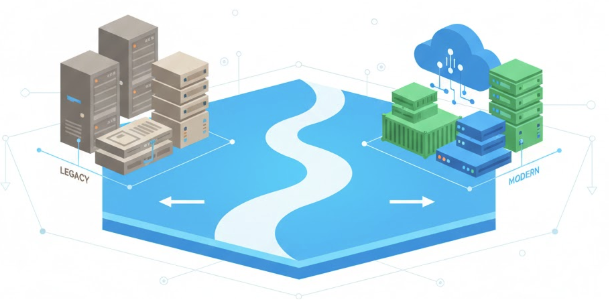
Bridging the Gap Between Virtual Machines and Containers
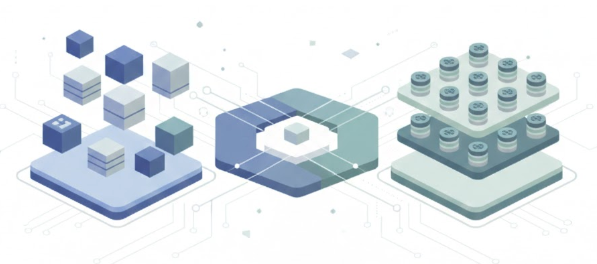
Traditionally, enterprises treated legacy Virtual Machines (VMs) and modern container-based applications as separate worlds. However, this separation often increases operational complexity and slows modernization efforts.
A more resilient approach is to adopt a unified platform architecture—one that allows VMs and containers to coexist on the same infrastructure.
Platforms such as WikiBlox, built on Red Hat OpenShift, enable enterprises to:
Run existing VM-based workloads without re-architecting
Deploy and scale modern containerized applications
Manage both environments through a single operational framework
Why This Matters
Containers use lightweight process isolation and share the operating system kernel, making them fast and scalable. Virtual Machines, on the other hand, rely on a hypervisor and a full guest operating system, offering strong isolation for legacy and stateful workloads.
A unified platform allows enterprises to retain what already works while modernizing incrementally—reducing risk, cost, and operational friction.
How Migration Works in Practice
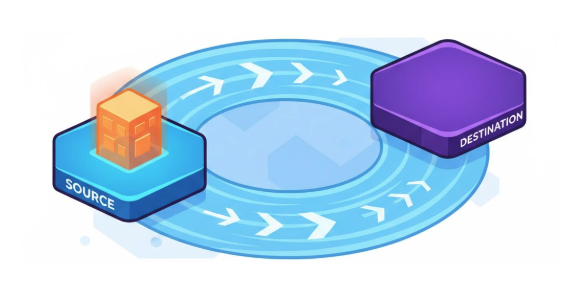
Migration is often the most intimidating part of any infrastructure transformation. Manual migrations—exporting VMs, converting images, and re-importing workloads—are time-consuming and prone to human error.
Modern enterprise platforms now leverage automation tools such as the Migration Toolkit for Virtualization (MTV), which simplifies migration by:
Connecting directly to existing VMware vSphere and Red Hat Virtualization environments
Automatically mapping networks and storage to the target platform
Migrating workloads with minimal downtime while preserving data integrity
This approach allows enterprises to move workloads safely, predictably, and at their own pace.
Why Enterprises Choose Wiki Labs
At Wiki Labs, infrastructure decisions are never treated as purely technical exercises. They are business-critical initiatives where uptime, compliance, and continuity matter.
Enterprises across banking, telecommunications, government-linked companies, and large private organizations trust Wiki Labs because of our proven execution in high-stakes environments.
What sets Wiki Labs apart:
Proven Track Record – Over 400 production success stories across regulated and mission-critical environments
Regulated Industry Expertise – Approximately 30% of our customers operate in the financial sector, with deep experience in compliance-driven IT environments
Single Point of Contact (SPOC) – End-to-end responsibility covering both hardware and software, supported by Managed Operation Services
24/7 Enterprise Support – Guaranteed 4-hour response time to ensure business continuity
Certified Engineering Team – Accredited professionals with official certifications from principal technology partners
Our role does not end at deployment. We operate, monitor, and continuously improve the platform alongside your team.
The Bottom Line: Modernize Without Disruption
Enterprises do not need to choose between maintaining stability and embracing innovation. A unified virtualization and container platform enables organizations to:
Reduce long-term licensing exposure
Maintain support continuity
Modernize applications at a controlled, sustainable pace
Prepare infrastructure for the next decade of enterprise IT
Not sure how exposed your current virtualization strategy is?
Speak with Wiki Labs to assess your existing environment and design a low-risk migration roadmap aligned with your business priorities.
